
Why Your Posture Gets Worse After 45 (And the 5 Movements That Fix It)
If you've noticed yourself slouching more than you used to — or caught your reflection in a window and wondered when that happened — you're not imagining it. Posture genuinely does get worse with age. But not for the reasons most people think, and more importantly, it's very fixable.
Here's what's actually going on, and what to do about it.
Why Posture Deteriorates After 45
It's not just age. It's accumulation.
Every hour you spend sitting at a desk, driving, looking at a phone, or working a keyboard, your body is adapting to that position. The muscles in the front of your body — your chest, hip flexors, and neck — shorten and tighten. The muscles in the back — your upper back, glutes, and deep spinal stabilizers — weaken and go quiet.
Do that for 20 or 30 years and your body starts to hold the position permanently.
By the time most people reach their late 40s or early 50s, the pattern is deeply set. Forward head posture adds an extra 10 pounds of load to your neck for every inch your head sits forward of your shoulders. Rounded shoulders compress the chest and restrict breathing. A weakened posterior chain — the entire back side of your body — leaves you fighting gravity all day, every day.
The result is what most people describe as feeling "stiff," "achy," or "older than they should."
The good news: none of this is permanent. Your body adapts to what you do consistently. If you've been training it into poor posture for decades, you can train it back out — but you have to use the right movements.
The 5 Movements That Actually Fix It
These aren't random stretches. Each one targets a specific part of the posture problem, and together they address the full pattern — from your neck all the way down to your glutes.
Day 1 — Cat-Cow Stretch (Spine Mobility)
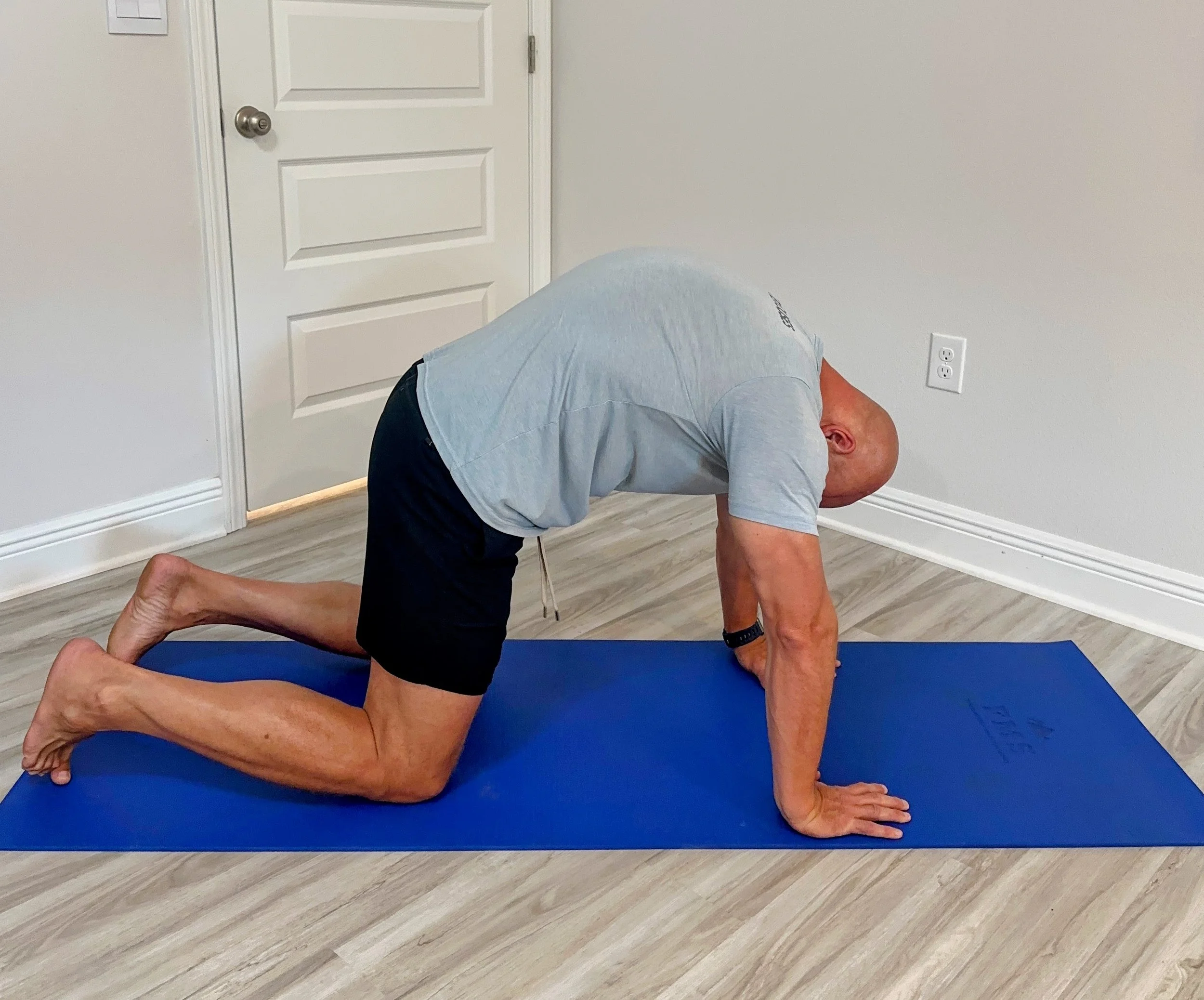
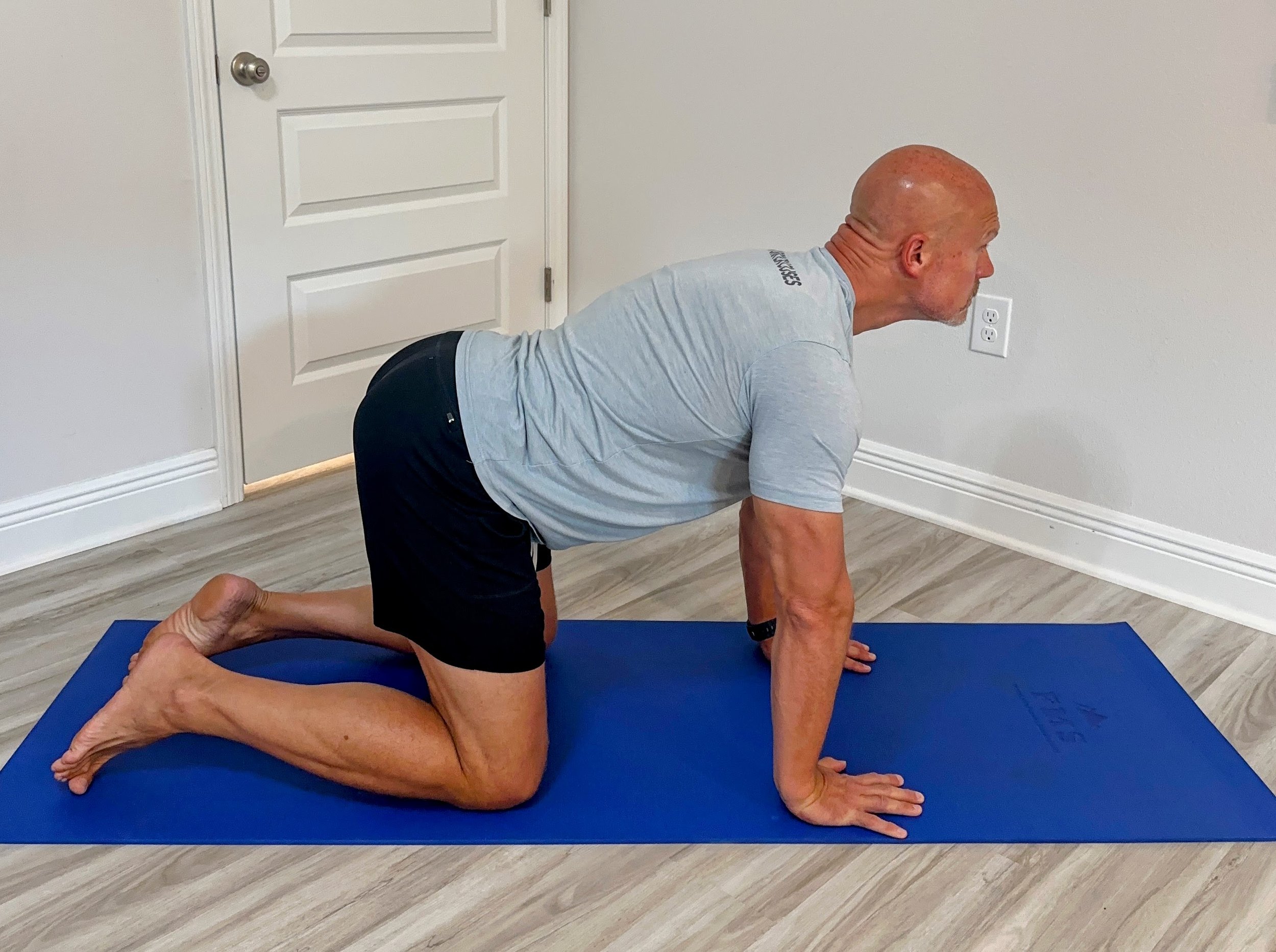
Most adults over 45 have lost significant spinal mobility without realizing it. The Cat-Cow restores the natural curves of your spine and activates the deep stabilizers that protect your vertebrae. Research published in the Journal of Physical Therapy Science confirms it reduces chronic low back stiffness — one of the most common complaints in adults over 45.
How to do it: Start on hands and knees, wrists under shoulders, knees under hips. Inhale and let your belly drop toward the floor, lifting your head and tailbone (Cow). Exhale and round your spine toward the ceiling, tucking chin and tailbone (Cat). Move slowly — let your breath lead. 10 reps, 2 sets.
Day 2 — Chin Tuck (Forward Head Correction)
Forward head posture is the single most common postural problem in adults today. The chin tuck directly targets and strengthens the deep cervical flexor muscles — the ones responsible for holding your head in proper alignment. A study in the Journal of Physical Therapy Science found these muscles are almost universally weak in adults who spend time at a desk or looking at a phone.
How to do it: Sit tall or stand against a wall. Keep your eyes level. Gently draw your chin straight back — as if making a double chin. Hold for 5 seconds, release. 10 reps, 2-3 times daily. You can do this at red lights as well…
Day 3 — Doorway Chest Stretch (Chest & Shoulder Opening)
The pectoralis minor — a small but powerful muscle under your chest — is one of the primary drivers of rounded shoulder posture. When it shortens, it pulls the shoulder blade forward and down. Targeted chest stretching, combined with upper back strengthening, is the most effective intervention available for correcting this pattern.
How to do it: Stand in a doorway, arms raised to 90 degrees with forearms resting on the frame. Step one foot forward and gently lean your body weight through the doorway until you feel a stretch across your chest and shoulders. Hold 30-45 seconds, 3 reps. Breathe deeply — let your chest open with each exhale.
Day 4 — Wall Angels (Upper Back Activation)
Your lower trapezius and rhomboids — the muscles between and below your shoulder blades — are almost always weak in people with poor posture. EMG research confirms that wall angels preferentially activate exactly these muscles, making them one of the most efficient upper back exercises available. No equipment needed.
How to do it: Stand with your back flat against a wall — feet about 4 inches from the baseboard. Press your lower back, upper back, and head against the wall. Raise arms to a goalpost position and slowly slide them up into a Y, keeping everything in contact with the wall. Slide back down. 10 slow reps, 2-3 sets.
Day 5 — Superman Hold (Full Posterior Chain Integration)
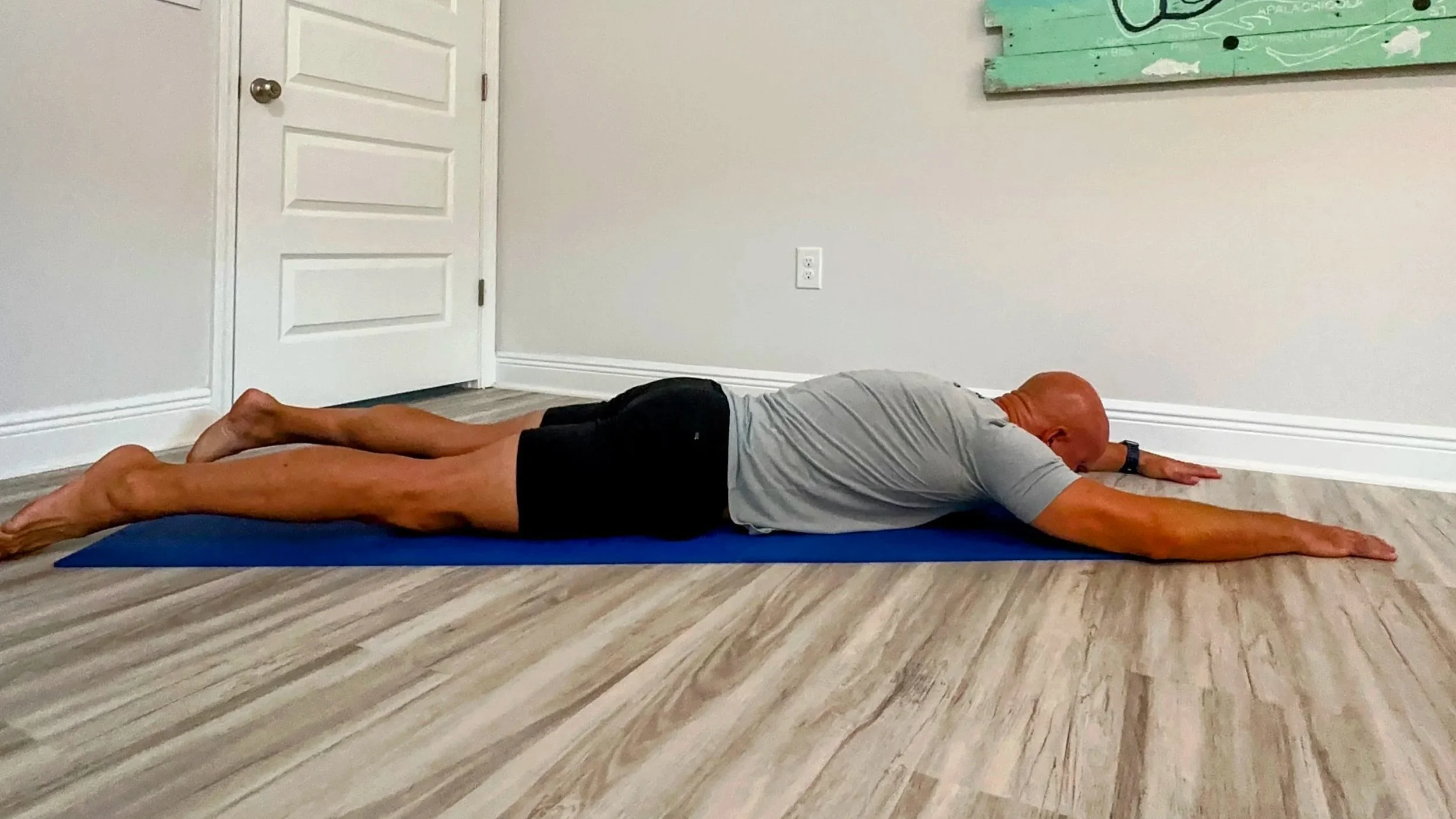
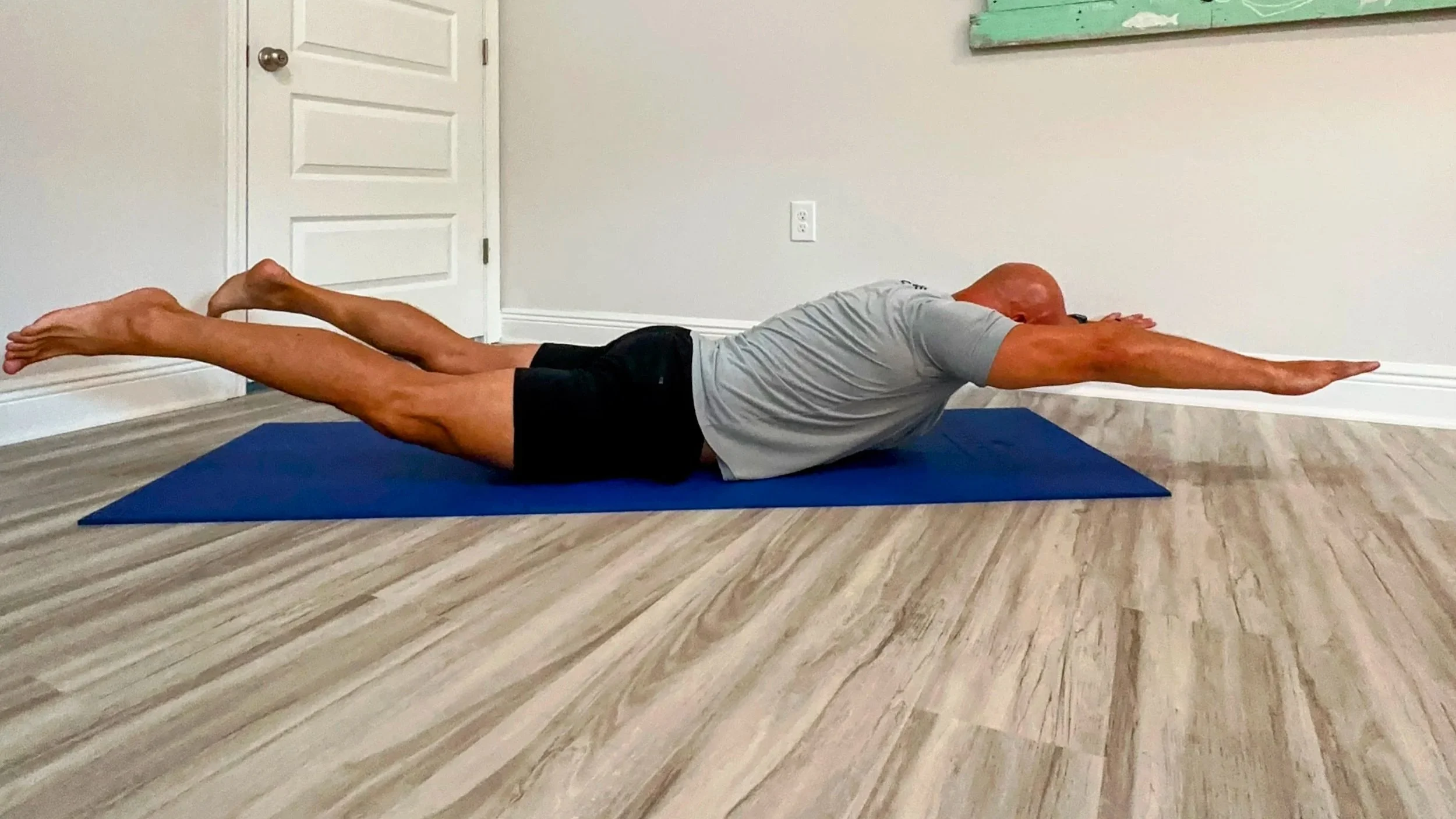
This is where it all comes together. The Superman activates your erector spinae, glutes, hamstrings, and rear deltoids simultaneously — every muscle responsible for holding you upright against gravity. A 2019 study in the Journal of Back and Musculoskeletal Rehabilitation found that short-hold, high-rep Superman holds produce superior postural endurance gains compared to single long holds.
How to do it: Lie flat on your stomach, arms extended overhead. On your exhale, brace your core and simultaneously lift your hands, arms, chest, and feet off the floor. Hold 2-3 seconds at the top — squeeze your glutes. Lower slowly. 10 reps, 2 sets.
The Real Secret: Consistency Over Intensity
None of these movements are complicated. None of them require a gym, equipment, or more than 10 minutes of your day. What they require is showing up — five days in a row, in order, with intention.
That's the FMS method. Small, consistent, science-backed actions that compound into real, lasting change.
Your posture didn't get where it is overnight. It won't reverse overnight either. But five days from now, you'll feel the difference. Five weeks from now, you'll see it.
Download the Free 5-Day Posture Reset Guide
I put all five of these movements — with full coaching cues, timing, and step-by-step photos — into a free PDF guide designed specifically for adults 45+.
It takes 10 minutes a day. No equipment. No gym.
Andy Summers is an ACE Certified Personal Trainer based in Port St. Joe, Florida, and the founder of FMS — Fitness Mindfulness Sustainability. FMS specializes in science-backed strength and posture training for adults 45+.
